
Diagnostics, Vet Visits, Giving Pets a Voice: Jay Mazelsky & Jay Price
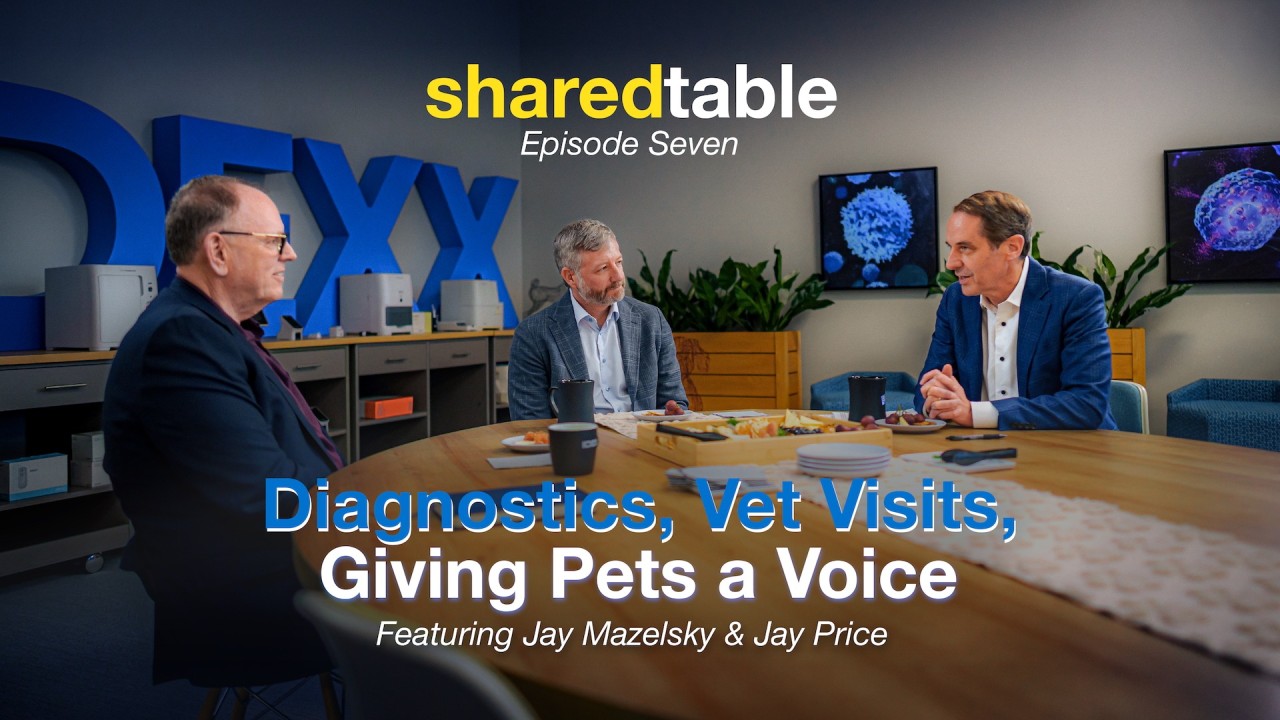 NORTHAMPTON, MA / ACCESS Newswire / May 4, 2026 / By Jeff Simmons, President & CEO at Elanco
Dogs and cats can't talk yet - but our next two guests are helping them do just that.
Recently, I sat down with two of the most transformative leaders in pet health: Jay Mazelsky, CEO of IDEXX and Jay Price, CEO of Mission Pet Health.
Between them, they see the entire journey of care. From diagnostics that uncover diseases to the 950 Mission Pet Health hospitals delivering care to our pets every day. If you want to understand where pet health is headed over the next decade - this is the table for you.
The expectation of care for our pets has never been higher. That isn't a warning. It's an opportunity.
The Pet Bubble and What Comes Next
The pandemic changed many things, and pet ownership wasn't immune to that. Net pet adoption grew by roughly 10% annually - a 4x increase over the historical norm.
Now, those pets are reaching a milestone. They are five to seven years old. The older an animal gets, the more care it requires. As Jay Mazelsky noted, we are entering a window when demand for senior veterinary care will build dramatically.
There is a lot of talk right now about vet visits. But context matters. Jay Price, who led clinics through the 2008 financial crisis, sees a cycle and a return to normal after the substantial Covid increase, not a permanent shift. For Mission Pet Health, they aren't seeing a decline; they see a return to the steady, durable growth that defines the industry.
Diagnostics: The Voice of the Pet
About one in five clinical veterinary visits include bloodwork. Only 12% of wellness visits include diagnostics. Outside the U.S., that number drops even further.
The opportunity is enormous. Every diagnostic brings more information. More information enables better decisions. Better decisions unlock tailored treatments. When we don't diagnose, we don't know the magnitude of a disease.
Moment to Remember: If only one in five pets gets diagnostics, we don't know the true spectrum of disease that exists today. We're only seeing the surface. The opportunity isn't just big. It's bigger than we can measure.
Jay Price shared a powerful perspective: if only 20% of pets are getting diagnostics, our data is incomplete. We might think the condition is "rare" simply because we aren't looking for it.
Take cancer. One in four dogs will develop it in their lifetime. Often, by the time it's visible, it's already at an advanced stage. Moving upstream with earlier diagnostics doesn't just save lives - it improves treatment affordability. An earlier diagnosis means more treatment options and better effectiveness at a lower cost.
It's not just dogs; cat spend at the clinic is beginning to converge with dog spend as more cat owners demand more comprehensive care. Opportunities like chronic kidney disease (CKD) in cats is a prime example. Early diagnosis, dietary intervention and close monitoring can meaningfully extend lifespan.
Best Quote: I think that what we should be most proud of as an industry over the last 15 years - the average cat and dog is living two years longer... a lot of it's the result of more innovation in the pharma and specialty diet and diagnostic space and better care driven by pet owners. They want to partner with the veterinarian and with the technology that's used, and they want to understand the underlying disease, what the options are, and how they can provide care. They see themselves as part of the solution.
And as AI continues to infiltrate all aspects of our lives, it's another opportunity of how the two examples mentioned above can be done faster, allowing veterinarians to walk into an exam room with insights, not just questions. However, as Jay Price, noted, we can't lose the critical human element of clinical decision-making.
Nobody's Too Good to Pick Up Poop
Whether it's rallying during a pandemic or uncovering the next medical breakthrough, culture for IDEXX and Mission Pet Health is the glue.
As Jay Mazelsky rounds out his tenure at IDEXX and retires later this month, he leaves behind a legacy built on a challenger mindset. That means guarding against entitlement, hiring for curiosity and setting audacious goals.
Jay Price grounded it in a phrase from his very first hospital experience: Nobody's too good to pick up poop.
It's a reminder that in animal health, we are all servants to the mission. We show up with a spring in our step because we believe that when animals are healthy, the world is better.
Big Takeaway: As diagnostics expand what we can detect, AI accelerates what we can learn, and a generation of middle-aged pandemic pets enter their highest-care years; the pie isn't shrinking. It's growing. A rising tide lifts all boats. The leaders who focus on delivering value - to the pet, the owner, and the veterinarian - will be the ones who grow with it and beyond.
Thank you, Jay Mazelsky, for hosting us and for decades of work giving our pets a voice. Congratulations on a remarkable chapter. And thank you, Jay Price, for your insights and the commitment and support your clinics provide every day for our pets.
The best is yet to come for animal health.
Catch the full conversation on YouTube.
Find more stories and multimedia from Elanco at 3blmedia.com.
Contact Info:
Spokesperson: Elanco
Website: https://www.3blmedia.com/profiles/elanco
Email: [email protected]
SOURCE: Elanco