
PicoJool Introduces 200G VCSELs and MicroVCSELs for Scale Up AI Data Centers
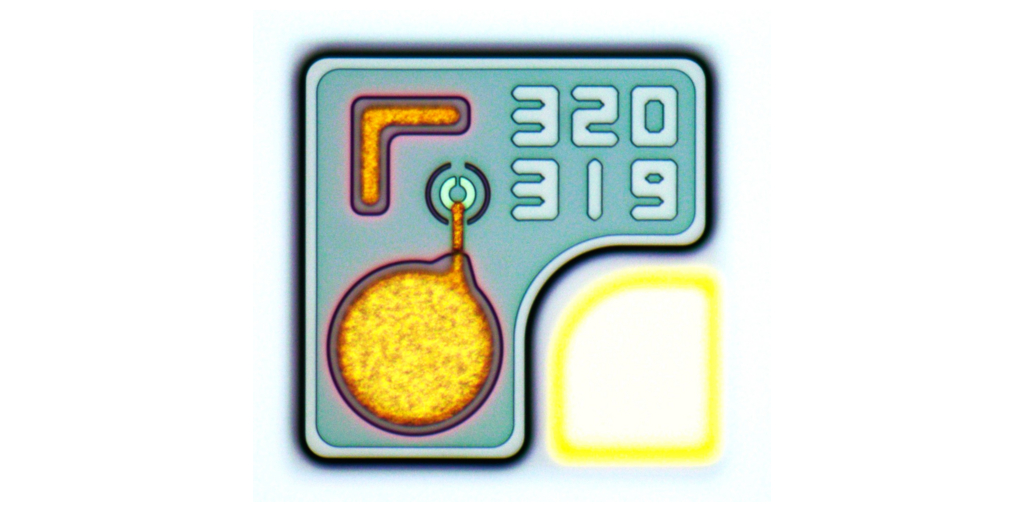 PALO ALTO, Calif.--( BUSINESS WIRE)-- PicoJool, a pioneer in optical connectivity, is introducing its 200G Vertical Cavity Surface Emitting Lasers (VCSEL) products with a bandwidth exceeding 37GHz. The company will begin sampling chip-level products in the next quarter, including quad 100G, quad 200G and 32x50G NRZ uVCSELs for slow and wide applications. PicoJool is already working with system startups and hyperscalers to define the next generation of pluggable, near-packaged optics (NPO) and co-packaged optics (CPO) solutions for AI data centers.
VCSELs have been the backbone of data center optical connectivity since 1996, valued for their speed, reliability and unmatched cost efficiency. Up until now, the question has been whether the technology could scale to meet the bandwidth demands of modern AI infrastructure. PicoJool's breakthrough technology eliminates that question. The company's 200G VCSEL products pave the way for optical links as inexpensive, compact and manufacturable as traditional copper connections, with a clear roadmap to 800G, 1.6T and 3.2T.
PicoJool’s high bandwidth VCSELs combine unique parallel optics and packaging innovations to deliver high performance at a cost that competes directly with copper at scale. The company integrates its optical chips into massively parallel pluggable modules targeting large-scale AI systems. Underpinning the effort is a manufacturing partnership with WIN Semiconductor, the world's leading VCSEL producer for 3D sensing applications, which has shipped more than a billion chips over the past decade.
“We are excited to enable many optical transceiver and hyperscale companies to meet the growing demand for scale up optical connectivity solutions with an exciting product line and roadmap,” said Al Yuen, founder and CEO of PicoJool. “Our partnership with WIN Semiconductor has been very fruitful as we get ready to release a series of VCSEL products for high volume manufacturing.”
PicoJool's 200G designs and process recipes have already been transferred to WIN and other foundries, all of which specialize in gallium arsenide (GaAs), a compound semiconductor that emits light far more efficiently than silicon and already supports a mature, high-volume chip supply chain. Because GaAs-based VCSELs are unconstrained in production capacity, PicoJool avoids the supply bottlenecks that limit competing laser technologies.
“What makes Picojool significant is both the technology breakthrough and the manufacturing reality behind it,” said Pat Gelsinger, General Partner at Playground Global. “By building on a GaAs supply chain that has already shipped billions of chips, Picojool has solved both sides of the equation: record bandwidth and the production scale to deliver it. That combination is what turns a lab achievement into an industry shift, creating a viable path from copper to optical at AI scale.”
The PicoJool team brings decades of photonics product development and optical transceiver experience. Founder Al Yuen has released VCSEL-based products starting with gigabit Ethernet in 1996, the first 10G quad transceivers at his first startup, Alvesta, invented the active optical cable technology in 2001, and vertical oxidation for extreme volume VCSEL fabrication in 2016. The depth of the company’s technical expertise and the breadth of its relationships across the semiconductor supply chain uniquely positions PicoJool to design, deliver and scale massively parallel optical solutions for 1.6T, 3.2T and beyond.
PicoJool will begin sampling its 200G VCSEL products in the next quarter with high volume ramp expected in early 2027.
About PicoJool Inc.
PicoJool Inc. is developing next-generation optical chips and modules for high-bandwidth, low-cost connectivity in hyperscale AI data centers. Founded by Al Yuen, who has foundational expertise in data center optical networking systems, PicoJool is redefining optical communication at the semiconductor to transceiver level. Learn more at https://picojool.com/.