
Sony Semiconductor Solutions to Release 4K Image Sensor for Security Cameras with the Industry's Smallest 1.45 µm LOFIC Pixels
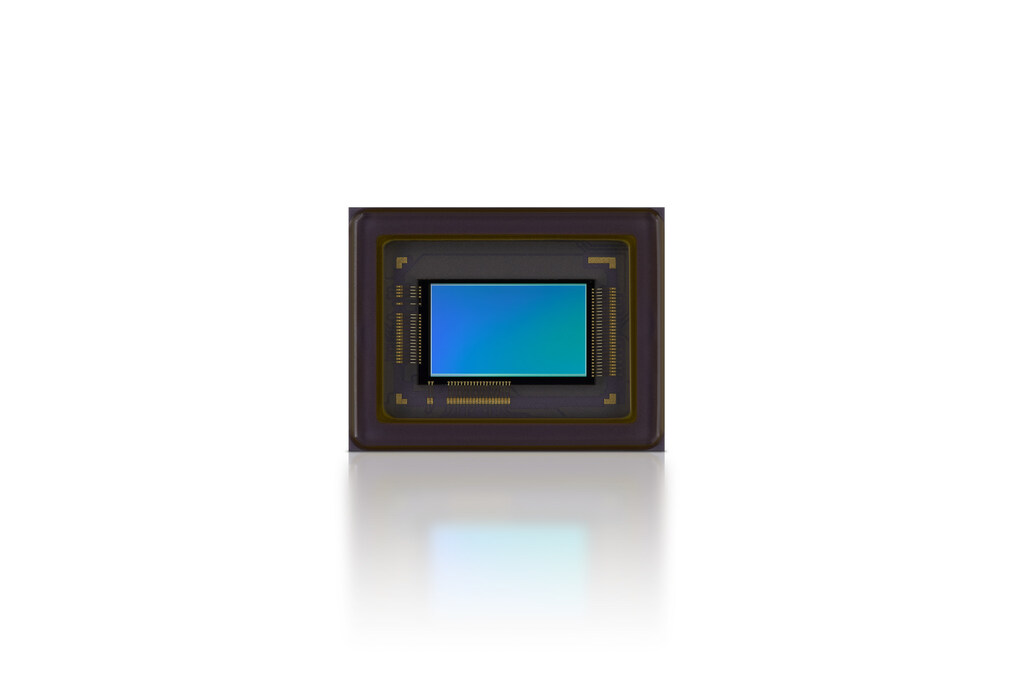 Contributing to improved recognition precision with high image quality in high-contrast environments and dark scenes
ATSUGI, Japan, March 17, 2026 /PRNewswire/ -- Sony Semiconductor Solutions Corporation (Sony) today announced the upcoming release of the IMX908, a 4K CMOS image sensor for security cameras with the industry's smallest *1 1.45 µm LOFIC *2 pixels.
The new sensor uses the newly developed LOFIC pixels to achieve 96 dB high dynamic range imaging at 4K resolution with a single exposure. Building on this, improved low-light performance delivers high-quality imaging with reduced highlight blowout, loss of shadow detail, and noise in both high contrast environments and dark locations compared to conventional products.
The new sensor will expand SSS's lineup of products with both high-resolution and high dynamic range for security camera applications, which require high-precision image recognition in a wide range of indoor and outdoor environments, thereby contributing to a safer and more secure society.
*1 Among CMOS image sensors for security camera applications. According to Sony research (as of announcement on March 17, 2026).
*2 Lateral overflow integration capacitor (LOFIC).
Model name
Sample shipment date
(planned)
IMX908 1/2.8-type (6.42 mm diagonal)
8.4-effective-megapixel *3CMOS image sensor
End of March 2026
*3 Based on the image sensor effective pixel specification method.
Security cameras have been widely used not just for security surveillance, but also in broad applications including monitoring public spaces such as urban areas and other facilities. As AI-based image recognition becomes a standard feature in cameras, the demand for image sensors that can provide stable and high-quality imaging in conditions from bright to dark continues to grow.
The IMX908 employs STARVIS 3™, Sony's proprietary LOFIC pixel technology developed for security cameras. It enables nearly 20x the amount of saturated charge as conventional products *4 and delivers an approximately 27% improvement *4 in low-light performance, *5 which makes for a dynamic range of 96 dB. Not using multiple exposures, the more common method for HDR imaging, this sensor also provides high dynamic range imaging with a single exposure to deliver high-definition images with fewer artifacts, *6 even of scenes with moving subjects. Furthermore, Sony's original pixel design has enabled all these features to be provided at the industry's smallest *1 LOFIC pixel size of 1.45 µm. By offering higher-quality 4K imaging even in high-contrast scenes and dark environments, the new product will contribute to improved recognition accuracy and multifunctionality in security cameras.
*4 Compared to the IMX778 1/2.8-type, 8.45-effective-megapixel image sensor for security cameras.
*5 Based on SNR1s, Sony's proprietary low light image quality index for security camera CMOS image sensors.
*6 Visual anomalies (e.g., unintended patterns and shifted colors) resulting from image processing that were not present in the original scene.
Main Features
Related Links
IMX908 product page
https://www.sony-semicon.com/en/products/is/security/security/IMX908.html
Sony security camera image sensor technology STARVIS™ information
https://www.sony-semicon.com/en/technology/security/index.html
Key Specifications
Model name
IMX908-AQR1
Image size
Diagonal 6.42 mm (1/2.8 type)
Effective pixels
3,856 (H) × 2,180 (V)
Approx. 8.4 megapixels
Unit cell size
1.45 μm (H) × 1.45 μm (V)
Frame rate
10bit: 90 fps
12bit: 60 fps
Input drive frequency
24 / 27 / 37.125 / 72 / 74.25 MHz
Power supply
1.1 / 1.8 / 3.3 V
HDR support functions
Clear HDR *7 (30 fps, 16bit)
Clear HDR3 *7 (30 fps, 16bit)
Hybrid HDR3 *7 (30 fps, 12bit)
DOL/12bit 2F 30 fps
DOL/10bit 3F 30 fps
SNR1s
0.53 lx
Dynamic range
96 dB (Clear HDR3)
Output interface
MIPI D-PHY 2 / 4 Lane
Color filter
Bayer
Package
Ceramic LGA AR coating
Size: 12.0 mm (H) × 9.3 mm (V)
*7 Uses internal compositing.
Note: STARVIS, STARVIS 3, and their logos are the registered trademarks or trademarks of Sony Group Corporation or its affiliated companies.
SOURCE Sony Semiconductor Solutions Corporation